A good LASIK candidate is generally an adult with a stable vision prescription, healthy eyes, sufficient corneal thickness, and overall health that supports healing. Candidacy is always an individual medical determination, not a checklist you can pass at home. This guide explains the factors professionals typically assess so you know what the evaluation covers.
Why Candidacy Cannot Be Self-Assessed
It is tempting to read a list of candidacy factors and decide you qualify. That instinct is understandable but unreliable. Many of the factors that matter most — corneal thickness and shape, tear film quality, the health of the retina, subtle irregularities in the cornea — can only be measured with specialized diagnostic equipment during a professional evaluation. Two people with identical glasses prescriptions can receive opposite candidacy verdicts.
This is also why reputable providers insist on a comprehensive consultation before quoting a firm price or scheduling surgery. Our guide to what to expect at the LASIK consultation describes that evaluation in detail. Think of this article as background that helps you understand the conversation — not as a substitute for it. If any factor below raises a question about your own situation, bring it to the consultation rather than deciding the answer yourself.
Adults With Stable Vision Prescriptions
Providers generally look for patients whose vision has been stable over time. The reasoning is straightforward: LASIK reshapes the cornea to correct your current prescription, so if that prescription is still shifting, the correction may not hold. Stability is typically assessed by comparing recent eye exams — if your glasses or contact lens prescription has changed little or not at all across recent visits, that is a favorable sign.
This is also why LASIK is generally an adult procedure. Young people's eyes and prescriptions are often still changing, which makes lasting correction harder to achieve. There is no universal threshold you can apply to yourself; the professional evaluates your prescription history alongside your age and eye development. Bring your recent prescription records to the consultation — they give the evaluator concrete history to work with rather than your recollection alone.
Sufficient Corneal Thickness and Healthy Corneal Shape

The cornea — the clear front surface of the eye — is the tissue LASIK reshapes, so its thickness and shape are central to candidacy. The procedure removes a small amount of corneal tissue, and enough must remain afterward to keep the eye structurally sound. Corneal thickness is measured during the evaluation with instruments you will not have at home, which is another reason self-assessment cannot work.
Shape matters as much as thickness. The cornea should have a regular, healthy contour; irregularities can signal conditions that make LASIK inadvisable. If measurements show thin corneas or irregular shape, that does not necessarily end the conversation about vision correction — it may point toward alternative procedures that do not reshape the cornea in the same way. The evaluation exists precisely to make these distinctions.
Good Overall Eye Health
Beyond the cornea, the professional examines the whole eye. Conditions affecting the eye's surface, internal structures, or tear system factor into the decision. Eyes should generally be free of active infection or inflammation at the time of surgery, and the tear film should be adequate — significant dry eye is a common concern that the evaluator will assess and may want to treat before considering surgery.
This whole-eye view is one of the consultation's most valuable parts, because it can surface issues you did not know you had. Some findings simply delay surgery until a condition is treated; others redirect you toward a different procedure or away from surgery entirely. Either outcome is the evaluation working as intended. A thorough screening that occasionally says "not yet" or "not this procedure" is a sign of a careful practice, not a failed appointment.
General Health That Supports Healing
Because LASIK involves healing, your overall health is part of the picture. Certain health conditions and medications can affect how the eye heals or how the immune system responds, and the evaluator will ask about your medical history and current prescriptions. This is a routine part of the assessment, not an intrusion — healing well is as important as the laser work itself.
Be complete and honest in this discussion. Mention all diagnosed conditions, all medications including over-the-counter ones, and any history of slow healing. Withholding information to improve your chances of approval works against your own interests: a candidacy decision made on incomplete history is a decision made on false premises. If a health factor complicates LASIK, the professional may suggest addressing it first, adjusting timing, or considering reasons you might not be a candidate before you invest further.
Realistic Expectations About Outcomes
A good candidate also understands what LASIK can and cannot do. The procedure reduces dependence on glasses or contacts; it does not guarantee perfect vision, prevent age-related vision changes, or eliminate the possible need for reading glasses later in life. Patients who expect a specific outcome — rather than an improvement within a range — are more likely to be disappointed regardless of how well the surgery goes.
The consultation should include an honest discussion of likely outcomes for your particular eyes, including the possibility of needing an enhancement procedure later. Ask what a realistic result looks like for someone with your prescription and eye characteristics, and listen carefully to the caveats. A provider who discusses limitations openly is giving you the information you need; one who promises certainty is not describing medicine accurately.
What the Evaluation Actually Involves
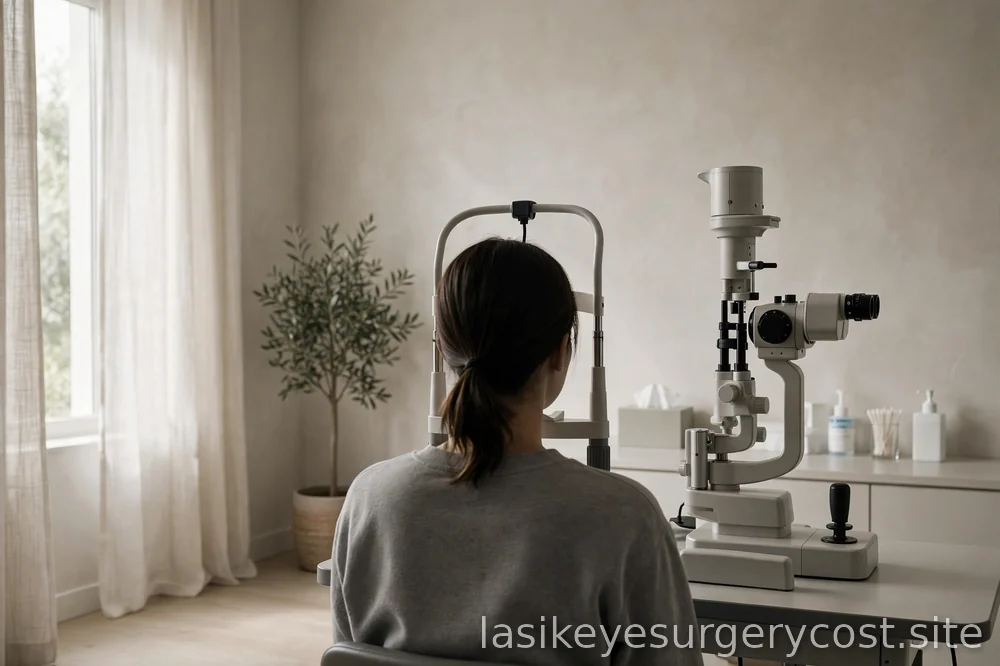
Knowing what happens at the assessment can make it less intimidating. Expect a detailed medical and eye history, precise measurements of your prescription, mapping of your cornea's shape and thickness, evaluation of your tear film, examination of the retina and optic nerve, and measurement of your pupils. The process takes meaningful time — a rushed, few-minute screening is not a thorough evaluation.
Afterward, you should receive a clear verdict with reasoning: a good candidate, a candidate with conditions or timing adjustments, or not a candidate for LASIK specifically. If the answer is anything other than a straightforward yes, ask what the finding means, what your options are, and whether alternative vision correction procedures might suit you better. A "no" for LASIK is often the beginning of a conversation about alternatives, not the end of the road.
If You Are Told to Wait
Sometimes the verdict is "not yet" rather than "no." A prescription that has not stabilized, an eye condition under treatment, a medication that will soon change, or a life stage involving hormonal shifts may all argue for waiting. This guidance protects your outcome — surgery timed well beats surgery timed soon.
If waiting is recommended, ask what specifically should change before re-evaluation, and what timeframe the professional suggests for coming back. Then follow it. Returning for re-evaluation after the recommended interval, with the requested change in place, gives you the best chance of a clear answer — and of a good result if the answer becomes yes.
Frequently Asked Questions
How do I know if I am a good LASIK candidate?
You cannot determine this reliably on your own. The factors professionals evaluate — corneal thickness and shape, tear film quality, retinal health, prescription stability, and how your general health affects healing — require specialized diagnostic equipment and clinical judgment. Broadly, candidates tend to be adults with stable prescriptions, healthy eyes, and sufficient corneal thickness, but these are tendencies, not a home checklist. The only reliable answer comes from a comprehensive evaluation by a qualified eye-care professional, who will give you a verdict with reasoning specific to your eyes.
Does having a strong prescription disqualify me from LASIK?
Not automatically. Stronger prescriptions remove more corneal tissue, so they demand more corneal thickness — but plenty of people with significant prescriptions are candidates, and plenty with mild ones are not, depending on their individual measurements. The prescription strength is one input among many, weighed alongside corneal thickness, corneal shape, and overall eye health. Rather than assuming your prescription decides the matter, bring your recent prescription history to a consultation and let the diagnostic measurements answer the question for your specific eyes.
Can dry eyes prevent me from having LASIK?
Significant dry eye is one of the more common concerns evaluators assess, because the procedure can temporarily affect the tear film. It does not always rule out surgery — mild cases may simply be treated and monitored, with timing adjusted accordingly. What matters is the professional's assessment of your tear film during the evaluation, not a self-diagnosis based on occasional dryness. Mention any dryness symptoms honestly at the consultation, and ask what the findings mean for your candidacy and whether treatment before surgery is advisable.
If one provider says no, should I get a second opinion?
A second evaluation is reasonable, especially if the first felt rushed or the reasoning was unclear. Different practices use different diagnostic equipment and clinical judgment, so verdicts can occasionally differ on borderline cases. However, be cautious about shopping for a "yes": if multiple thorough evaluations identify the same concern — such as thin corneas or an irregular corneal shape — that consensus is meaningful information, not an obstacle to shop around. Ask each evaluator to explain their reasoning in terms you understand, and weigh careful explanations over convenient answers.
What happens if I am not a candidate for LASIK?
A "no" for LASIK is not necessarily a "no" for vision correction. Depending on the reason, alternatives such as PRK or implantable lenses may suit your eyes better, since they interact with the eye differently — our guides to PRK and other alternatives explain the options. Sometimes the answer is "not yet," with a clear path to re-evaluation after a prescription stabilizes or a condition is treated. Ask the evaluator what the finding means, what alternatives fit your situation, and what timeframe makes sense for next steps.
This site is educational information only — not medical advice. Consult a qualified eye-care professional about your own situation.